Pool Safety Barriers
Built to the statute, permitted properly, and we stand at the inspection with you.
- From
- $44 / ft installed
- Code
- F.S. 515 compliant
- On site
- 1–2 days
- Inspection
- We attend
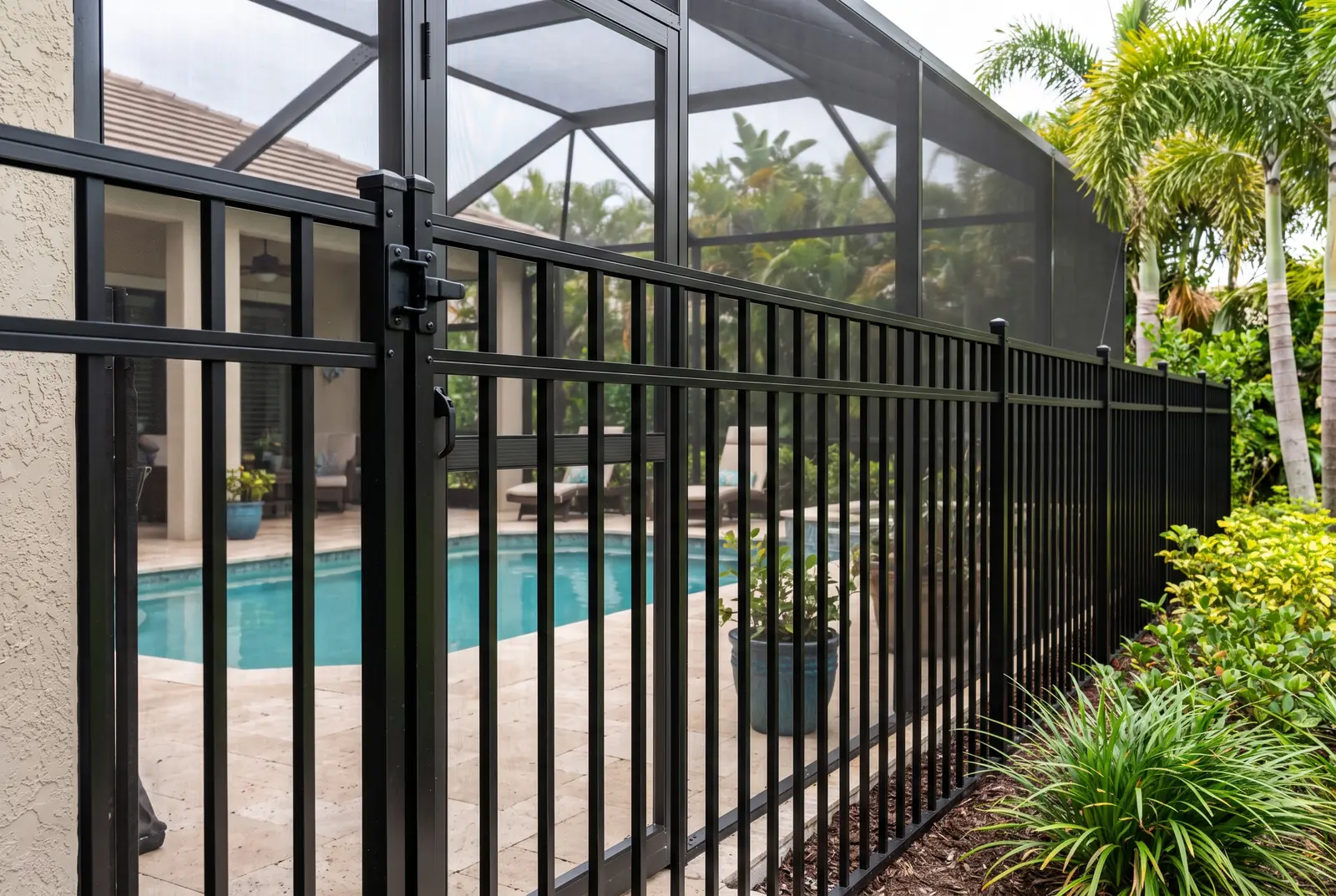
Florida's Residential Swimming Pool Safety Act is specific, and it is specific in ways that catch people out. The barrier has to be at least four feet high measured from the outside. No opening may allow a four-inch sphere through. There can be no external handholds or footholds within the climbable zone. And the gate must open away from the pool, self-close from any position and self-latch, with the release mechanism at least fifty-four inches above the ground.
In practice the gate is what fails. We are regularly called to properties that failed inspection twice over a latch mounted at a convenient height rather than a lawful one, or a closer that will shut the gate from halfway but not from fully open. Those are ten-minute fixes if you know the rule and a fortnight of rescheduling if you do not.
The other thing worth saying plainly: a barrier is a legal minimum, not a substitute for supervision. We will happily talk you through alarms, self-latching door hardware on the house and the difference between a barrier that satisfies an inspector and a yard that is genuinely hard for a small child to get into.
What is in the price
Four-foot minimum height
Measured on the outside face, on the actual grade, including any low spot along the run.
Four-inch gap rule throughout
Picket spacing, the gap beneath the run and any decorative cut-out all checked against the sphere.
No external climbing aids
Rails kept off the outside face within the climbable zone — the detail most stock panels get wrong.
Self-closing, self-latching gate
Swings away from the water, closes from fully open, latch release at or above fifty-four inches.
Permit and inspection
We file it, and we are on site when the inspector arrives so nothing hinges on a phone call.
Written compliance summary
A one-page record of heights, gaps and hardware, which is worth having for insurance and for resale.
How it runs
Walk the barrier line
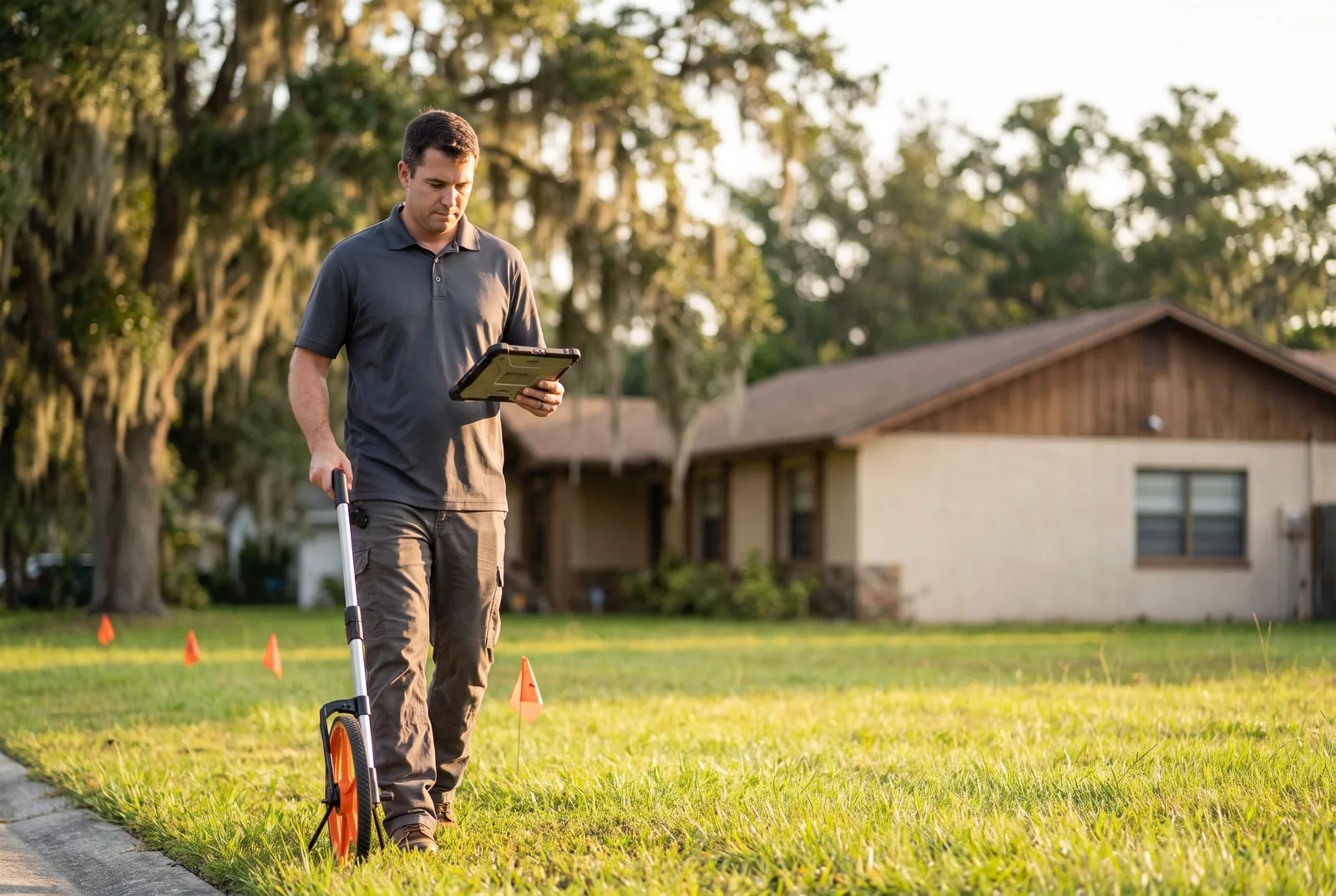
We establish where the barrier legally has to run — which is often not where people assume, especially with a screen enclosure involved.
Spec to the statute
Height, spacing and hardware chosen against the code, and shown to you in writing before the quote.
Permit and install
Filed with the county, then set and racked to the real grade so no low spot drops under four feet.
Inspection day
We meet the inspector, tape in hand. If anything is queried we correct it there rather than rebooking.
Questions we get on this one
Does a screen enclosure count as a barrier?
It can, if it meets the same height, opening and gate requirements — and many stock enclosures do not, particularly on the door hardware. We will look at what you have and tell you honestly whether it qualifies or whether you need a barrier inside it.
What if my house wall forms part of the barrier?
That is allowed under the statute, but then any door giving direct access to the pool has to carry an alarm or a self-closing, self-latching device with the release above the height a child can reach. We will point out every door that falls into that category.
How high does the latch actually have to be?
At least fifty-four inches above the ground when the release is on the outside of the gate. If the release is on the pool side and shielded, the rule changes. We set to fifty-four as standard because it passes either way.
Free on-site measure
Book the measure.
Get one flat number.
We walk the line, check it against your survey, and email an itemised price the same day. No deposit to book, no call centre, and nothing gets pushed on the doorstep.
- Yard
- 5808-1818 Commerce Street, Unit 1
Jacksonville, FL 32211 - Hours
- Mon–Fri · 7:00am – 6:00pm
Saturday · 8:00am – 2:00pm
Sunday · Storm calls only